What You're Actually Buying When You Hire a Social Media Videographer
Quick Navigation

A video that works on your website can fall flat on Instagram. One built for Instagram can feel wrong on LinkedIn. Most marketing teams have learned that much the hard way.
Here is the part that costs real money: hiring a social media videographer looks like a staffing choice, and what it decides is whether a year of social content exists, planned, shot and delivered at the pace the platforms set. Social media video is not corporate video scaled down. It is a different discipline, built around how people scroll, not how they sit and watch.
Search the term and you mostly find availability: directories of experienced videographers sorted by day rate, content creation agencies with rate cards, job boards, creators' portfolio sites of past projects. The listings promise professional video, stunning visuals and high quality video content. Almost none of them tell marketing teams what the hire has to produce across a year of brand campaigns; this page covers that half, the work itself and the decisions that belong to you before the first shoot day.
A good camera isn't the bottleneck
Social media video needs three things a camera cannot supply: platform-specific pacing, a reliable audio setup, and dedicated production time. The equipment question settles itself; any current camera produces social-ready footage. What decides whether the final videos work:
- Someone who understands pacing and platform behaviour. Editing for a feed is its own craft, and it transfers badly from longer formats.
- A simple but reliable audio setup. Audio quality is the first thing that separates a usable clip from an amateur one.
- Dedicated time. Social video is a real discipline, not something squeezed between other tasks.
Miss any one of the three and it usually shows in the results, even when the footage itself looks fine. That judgment comes from running these productions.
Dedicated time is the one in-house marketing teams underestimate most. For most businesses, a channel that posts three times a week consumes shoot days, edit rounds and approval loops on a schedule that does not care how full the quarter already is.
Social output is decided on the shoot day
What separates a videographer who delivers clips from one who delivers a quarter of video content is decided before anyone presses record, and no edit can add what the day did not capture.
What gets planned before anyone films
Every clip is cut to one working assumption: the sound is off and the first second is the whole audition. That assumption sets three production rules before the camera is even chosen: no slow build, no logo intro, no waiting for context.
A social media videographer worth the day rate starts with the format the platform rewards. Short vertical clips, text-driven captions, fast cuts. The brand message gets built inside that format, rather than a finished corporate video being forced into a square crop after the fact.
Captions follow the same logic. They are planned as part of the editing, not pasted on at the end, because the clip has to carry its story to a viewer who never turns the audio on. Whether the editing runs through Adobe Premiere Pro or CapCut never shows in the feed; the pacing does.
Why "we'll cut it up later" doesn't work
Repurposing is real, but it is conditional. Clips from larger productions, event films, product launches, longer interviews, can become several standalone social pieces, but only when the original shoot was planned with that reuse in mind.
The arithmetic is unforgiving: cropping a 16:9 master into a vertical 9:16 frame discards roughly two thirds of the image. Whatever was composed for the wide frame, speakers, product, on-screen text, rarely survives it. And resizing the same video for three platforms usually produces content that underperforms everywhere, because none of the edits were built for how that platform's audience watches.
One day, several shot lists
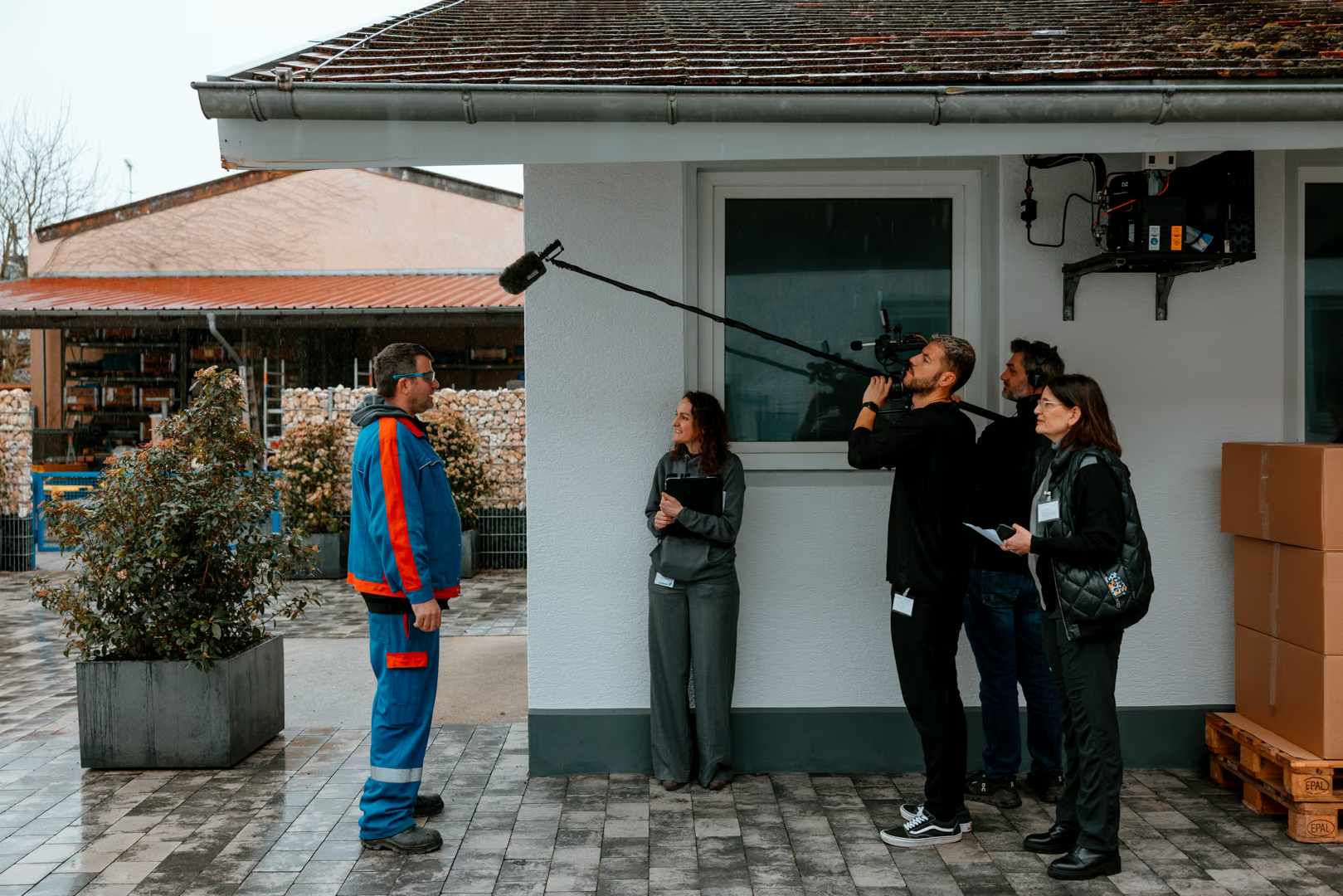
A shoot day that produces a quarter of content looks different from the first hour. Each format gets its own shot list and creative direction on the day: the soundbite gets its own framing and light, the behind-the-scenes gets a camera assigned to capture it, and the vertical coverage runs alongside the main setup instead of being cropped from it later.
For a retail campaign we produced for Glatt, the day was built around exactly this: short, platform-specific clips designed to work individually, not one video cut three different ways after the fact."
That is what you are paying for: a production planned so the social falls out of it.
Does this hold up on large productions?
It holds at enterprise scale, because that is where it comes from. Blank Media, a video production studio in Zürich, has produced social media video for BCG, IBM, KPMG, ZHAW, Bestsmile and Sika: content sprints, platform-native series and expert soundbites for Swiss clients whose audiences judge them on the feed, in finance, consulting, technology and healthcare. The short-form work with The Economist at WEF Davos came out of the same approach, on a live event where the schedule leaves no room to improvise coverage.
The full shape of the offer, content strategy, content sprints and multi-platform editing, sits on the social media video production page. The client names here make a narrower point: per-format planning is how large productions stay usable across platforms at scale.
What a year of social video asks of a social media videographer
Continuity, consistency and a working read of what performs. You cannot see any of the three on a showreel, and they decide whether month six looks like month one.
The read on performance comes from volume. A videographer who works daily across many brands, from fashion and lifestyle brands to e-commerce, builds a sense for what actually lands faster than any single in-house team can develop on its own; that is less about talent and more about repetition, seeing what earns watch time and traffic and what dies, across different accounts, every week. Social video content has a short shelf life; social media trends that work today can feel dated in weeks, so that read has to stay current.
The other two demands are structural:
- Continuity. A feed does not pause for one person's holiday. A team staffs through absences; a single hire cannot.
- Consistency. The hundredth asset has to look like it belongs to the same brand as the first, and that takes series formats and visual templates rather than memory.
- Custody. Someone holds the raw footage between shoots, knows what exists, and knows what can feed the next campaign without a new shoot day.
The engagement model is rarely a single booking, and the commitment is structural: monthly content plans and batched content sprints exist because a year of output cannot be improvised one shoot at a time. That keeps social video part of the marketing strategy rather than a pile of clips.
Speed follows the same rule: it is mostly decided before the shoot. When formats are locked, templates built and the editing scoped in advance, the final edits get delivered quickly and the quality holds. When everything starts from the raw footage, every clip is a new project.
What happens when your own people are on camera?
Settle the consent questions before filming starts, in writing. Corporate video mostly films people whose job includes representing the company; social media video reaches further into the building, to the specialist, the apprentice, the team behind the counter.
Three decisions belong in writing before any employee films: the usage release, what happens to published clips at departure, and what stays off camera.
- What gets signed. A release that covers where clips will run and for how long, not a verbal OK on the day.
- What happens at departure. Agree upfront whether published clips stay live when the person leaves the company.
- What "confidential" means on set. Behind-the-scenes filming sees whiteboards, screens and client names. Someone decides what the camera avoids before it starts moving.
You do not need a legal department to get started, but the answers have to exist before the shoot does.
Things to decide before the shoot day
The pattern of this hire sits in the table: what each format needs decided before the day, and what deferring it costs.
If a quarter of social media content is sitting on your plan, tell us what you're making. The first things we discuss will be your platforms and your people.
Frequently Asked Questions
Short answers to the questions that decide this hire. Each one stands on its own.
What does a social media videographer do?
A social media videographer plans, films and edits video content for social media platforms like LinkedIn, Instagram, Facebook, TikTok and YouTube: short vertical clips, fast cuts, captions for sound-off viewing. The work starts before the shoot, with per-format shot lists matched to each platform's specific requirements, and ends with a complete set of edits per platform rather than one video resized three ways. On brand productions, that spans expert soundbites, behind-the-scenes material and recurring series formats.
What's the difference between a social media videographer and a corporate videographer?
A social media videographer builds content for how feeds are watched: fast hooks, native formats, sound-off pacing, vertical first. A corporate videographer working toward a website film or a presentation works to different pacing and length standards. The overlap in craft is real, but the first second of a social clip does a job a corporate film never has to do.
How much social media content can one shoot day produce?
One planned shoot day can cut into weeks of platform-specific content. That volume comes from running several shot lists at once, expert soundbites, behind-the-scenes coverage and vertical material filmed alongside the main setup, not from longer hours. What a single day cannot replace is the content plan; without a plan, even a full day yields clips, not a quarter of output.
How soon after a shoot can social content go live?
That is decided mostly before the shoot, not after it. When formats, templates and captions are scoped in advance, edits follow the shoot day quickly; when everything starts from the raw footage, every clip becomes its own project. Ask how the editing is prepared before the day: the answer predicts the timeline better than any promised turnaround.
Who owns social video footage when employees appear in it?
The footage usually sits with the company that commissioned it; the person appearing in it grants the right to use it, and that grant is what belongs in writing. Agree before the shoot where clips will run, for how long, and what happens to published clips if the person leaves. Settling that on paper before the first shoot day is cheaper than taking a performing clip down later.