B2B Product Video in Switzerland: Filming Technical Products on Location
Quick Navigation

You have a technical product with real engineering behind it, and you need a product video that a plant manager will watch to the end. The film has to respect that complexity without losing the viewer in the first thirty seconds.
Most of what it takes to create a product video that works happens before a camera is switched on: who gets the crew into the facility, and who reads the script for accuracy. Those decisions belong to your side. This page runs through them in the order they get made, from whether the product can be filmed at all to the seven things lined up before the crew is booked, and it ends with a table you can forward.
What is a B2B product video?
A B2B product video is a short film that shows a technical product working, made for a buyer who is comparing specific solutions rather than learning a category. The viewer can check every claim in the film, and will.
Your potential customers are a plant manager or a procurement engineer at a mid-size manufacturer, and there are not many of them. A product video that spends its opening on what the category is has lost a technical viewer before the product appears. They pressed play to see whether this one fits before they sign a purchase order.
Your viewer already knows the category
The opening of a B2B product video skips the category. No need to explain what a filtration system is if the viewer already runs one. The first shot can be the product in the place it works, and the first sentence can be the problem it solves there.
One wrong specification undermines the whole film
A technical buyer notices inaccuracies fast. A single wrong claim about a specification or a performance figure undermines trust in the entire product video, and there is no way to earn it back inside the same film.
The terminology follows from that. For technical buyers, precise terms are expected, and a vague one gets noticed. For a mixed audience of engineers and their finance colleagues, a term is explained once, in a clause, and then used.
Can your product be filmed, or does it need 3D?
A technical product that does something visible can be filmed doing it. The decision between a camera and a render is made by what the viewer needs to see, and three situations push it toward the render.
- The mechanism is sealed. A camera films the outside of the housing; the buyer wants to see the valve inside it.
- The product does not exist yet. A prototype that lives in CAD cannot be put on a production line.
- The process is invisible at human speed. A reaction that takes hours, or a cycle that takes milliseconds, does not read on film.
Live action shows the product in its real setting
A product video filmed on the production line where the product runs lets a technical viewer picture their own application. The same product spinning on a white background shows what a set of static images already shows: the surface finish. The white-background shot is what stock libraries carry and what AI generators build from a set of product images.
Live action also picks up what nobody wrote into the script. The noise of the line and the operator who runs it every shift tell a plant manager the film was made somewhere real. They are also the details the viewer will recognise from their own floor.
3D reaches inside a sealed housing
A rendered cutaway shows the mechanism inside the housing, and for some products that is the only way to show what the buyer is paying for. A filter cartridge, or the flow path through a valve.
The usual answer for a technical product is a hybrid: live footage of the machine in place, with a rendered sequence where the film goes inside it. The footage is the proof that the machine exists and runs on a real line. Motion graphics and visual effects sit in post-production on our commercial work, which is where the two get joined.
Access decides the shoot date
The shoot date for a technical product video is set by when the crew can get into the facility. Technical product footage often requires access to a working facility, specific equipment running under real conditions, or a controlled environment, and none of those is straightforward to film in.
Access is a decision your side makes, and it takes longer than booking a crew. Sorting out access and any safety requirements early avoids losing a shoot day to logistics.
What does an AI product video generator sell?
Search for product video and the results sell software that lets anyone create videos and promises to produce professional, high converting product videos without a shoot. What the listings offer:
- An AI product video generator. AI avatars in place of a presenter, for product demos and testimonials alike, AI templates for every skill level and no learning curve. Paste a product link or a set of images and it will edit a complete product video, with a button to start creating product videos in minutes.
- A free product video maker. Drag-and-drop video creation to create product videos highlighting features, and creative ways to animate product images. A product demo video maker for e-commerce listings, built to showcase and brand the product.
- A library of product video examples. Compelling product videos that showcase SaaS launches, hand-picked for ideas, plus a definition of a great product video to measure yours against.
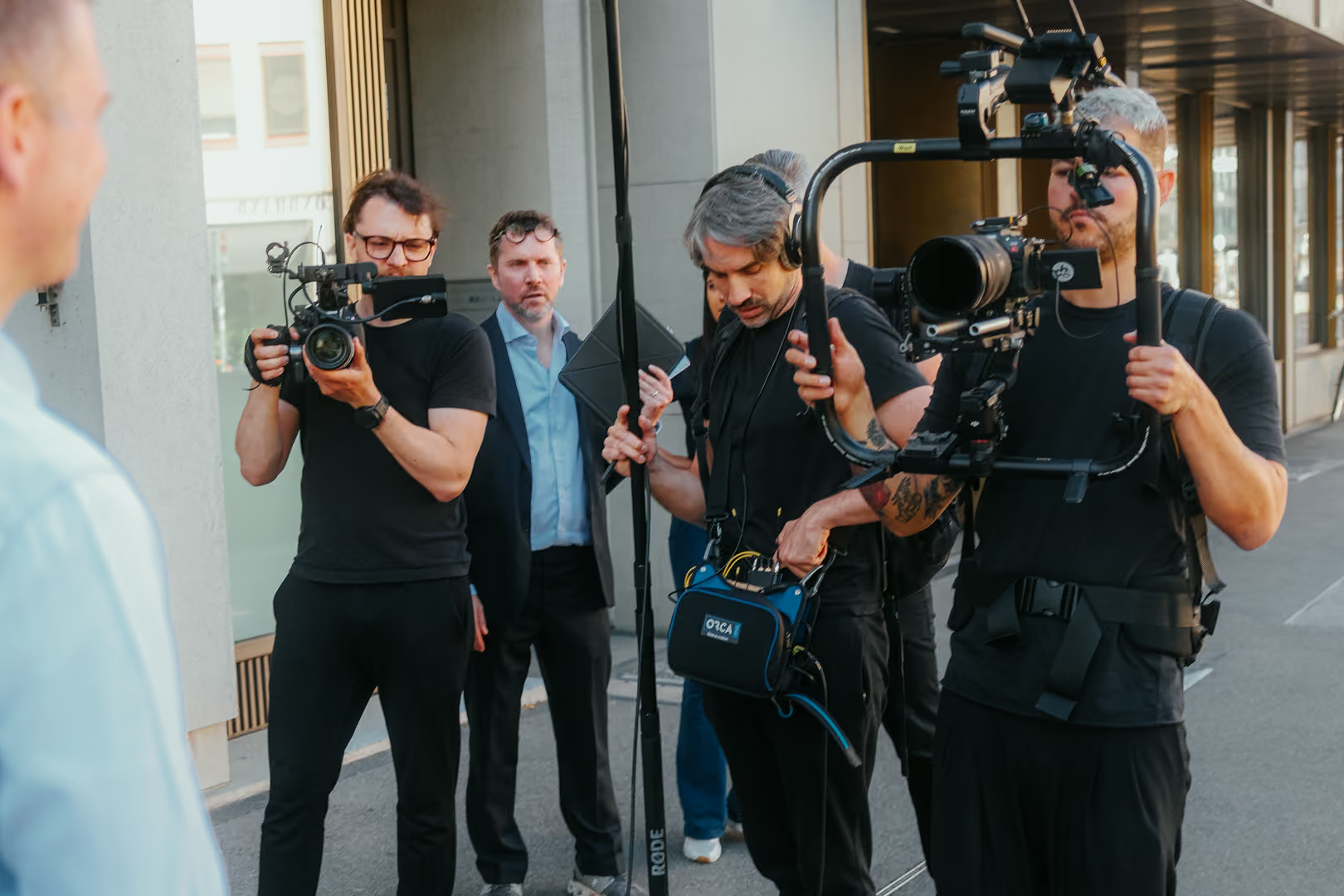
The right tools for a plant floor are a crew and a clearance, and no tool on that list sells either. Blank Media, a video production studio in Zurich, has produced commercial video for BCG, IBM, KPMG, ZHAW, Bestsmile and Sika, and shoots across Switzerland and internationally. The production team sets up on-site and brings the full kit.
Safety and access are cleared before the date is set
A plant will ask for visitor registration and a safety induction before anyone with a camera walks the floor, and on many sites the crew wears the same protective equipment as the operators. Each requirement has a lead time set by the plant, and none of it can be compressed by the production.
The order matters. Ask for the access requirements before a shoot date is discussed, because the date is whatever the clearance allows. The crew is booked once the clearance exists.
A late access request costs a shoot day
A crew that arrives without clearance waits at the gate on a day that is already booked. The day is invoiced either way.
The line does not stop for the camera either. If the product has to be seen running, the run itself has to be scheduled, and the person who schedules it works in production planning. Marketers rarely hold that calendar, so the request is made early.
Who checks that the technical claims are correct?
Every technical claim in the script is reviewed by someone at the company who understands the product at specification level, before the product video is finalised. This adds a review step to the schedule, and it prevents the factual errors a technical audience will catch. The reviewer is usually a product manager or an engineer, and seldom the person who commissioned the film.
Build the review into the plan before the shoot, because a specification corrected after filming means a reshoot or a compromise in the edit. On paper, the same correction is a sentence. Commercial productions at Blank Media run two to six weeks from the first conversation to the final file; where the technical review sits in that window is decided in the planning stage, with you.
One technical product usually needs more than one film
A complex product is better served by one short overview plus a series of shorter, focused videos than by one long product video that tries to cover everything. The strongest product videos anchor on one specific problem the target buyer has and show how the product solves it. Additional features live in follow-up videos rather than competing for attention in the same film.
The overview film ends on one call to action
An overview film answers one question for one buyer, what problem the product solves, and ends on one clear call to action. It carries the claim the viewer will remember. Everything else is a detail film.
The product demo video takes one feature at a time
A product demo video, the commonest detail film, takes one of the product's features or one procedure and shows it completely. The detail films are where product demos and tutorials belong, and they come off the same shoot day when the shot list is planned for them. Customer testimonials, with real customers on camera, are a separate format, covered in the B2B testimonial video guide; explainer videos are another, on the corporate video production page.
- Product demo video. The changeover procedure, filmed once, start to finish.
- Tutorial. How the product works through its maintenance cycle, for customers who have already bought.
- Application clip. The product under one load, in one setting, for one segment of the target audience.
Where does each version run?
Each version of a product video has one destination, and the destination sets its length and its format. The same footage is cut for each place it runs.
- Trade fair loop. Silent, with on-screen text, because the hall is loud and nobody is wearing headphones.
- Product page. Embed it on your website, on product pages and landing pages, for someone who chose to click, so it can run longer and carry the specification.
- Sales deck. The overview film, sent as a link after the meeting and forwarded inside the buyer's business.
- LinkedIn. Short video clips, vertical or square, sound-off and on mobile like all video content for social media platforms. The first second decides, in the feed and in online ads.
The platform versions in 16:9, 9:16, 4:5 and 1:1 come out of one production, with a broadcast master where a large screen needs it. The shot list is written per destination before the day.
German, French and Italian are decided before the edit
A Swiss B2B product video usually ships in more than one language, and the language versions are decided before the edit begins. Blank Media records voice-over in German, French, Italian or English, and subtitled cuts ship where the destination needs them.
When the languages are decided early, the shot list leaves room for the voice-over and the on-screen text, and the voice-over is recorded once per language against the same picture. Blank Media's three-language production for Bestsmile was shot at two locations in three production days; decided late, an edit gets rebuilt once per language.
Specifications are what dates a product film
Technical products evolve. A product video built around one exact spec or the unique features of this year's model ages faster than one built around the underlying capability and benefits, which stay accurate for the life of the product.
So the specification and the key features go in the detail films or in the on-screen text, where they can be swapped in post, and the overview film stays on the capability and the product benefits that survive a version change. A film needs updating when the product changes meaningfully, or when it names a version that has since been superseded.
What does your side prepare before we create product videos?
Seven things are lined up on your side before the crew is booked for your next product video, and each of them costs more when it arrives late. The table lists what, who owns it, and what the delay costs. It is the list we work through with you before a date is set.
How we create product videos for launches and brand campaigns, from the first conversation to the final files, is on the commercial video production page, with the rest of our video marketing work. If you have a technical product and a facility it runs in, tell us what you are making. The first things we will ask about are access and who reads the script.
Frequently asked questions
Five questions, phrased the way they get typed into a search box. Each answer stands alone and is short enough to forward.
What is a B2B product video?
A B2B product video is a short film that shows a technical product working, made for a buyer who already knows the category and is comparing specific solutions. The viewer can check every claim in it, so precision in what is said and shown matters more than in a consumer product video. It is usually filmed where the product runs rather than in a studio.
How long should a B2B product video be?
The length follows the destination. A trade fair loop and a LinkedIn clip run short; a product page or a sales deck can carry a longer overview with the specification. A complex product is better served by one short overview plus a series of focused videos than by one long film.
Can a technical product be filmed if it cannot be opened?
Yes, as a hybrid. Live footage shows the machine in place and running, and a rendered cutaway shows the mechanism inside the sealed housing. The two are joined in post-production, alongside colour grading and sound.
What does a production company need from us to create a product video?
A production company needs access to the facility with the safety requirements cleared, and someone who reads the script at specification level before the shoot. If the product has to be seen running, a scheduled run is the third item. Each is arranged on your side, with a lead time set by the plant.
Where does a B2B product video run?
A B2B product video runs on the product page, in the sales deck, at the trade fair and on social media, LinkedIn above all, and each of those gets its own cut from the same footage. The trade fair loop runs silent with on-screen text; the product page version can run longer and carry the specification; the LinkedIn version is vertical or square and sound-off.