Testimonial Videos for B2B: How to Persuade Decision-Makers
Quick Navigation

A testimonial video persuades because the company is not the one talking. Your customer says what you cannot say about yourself. A decision-maker who has read your product page a dozen times listens differently when the sentence comes from someone with nothing to sell.
That advantage is fragile. A testimonial video that reads as staged does more harm than good. The difference almost always comes down to preparation, to who you ask, what you ask them, and how much of their day you take.
What is a testimonial video in B2B?
A testimonial video is a short film in which a customer describes, in their own words and on camera, what changed for them after working with a company. In B2B the customer is a named person at a named organisation, and the change is something a colleague could check.
A commercial speaks with the voice of the brand, and a testimonial video hands that voice to someone who has nothing to sell. The viewer hears the difference. So does the decision-maker who has to defend the purchase to a board.
Employee testimonial videos are a different format with a different reader. They speak to candidates, and they belong with employer branding, so this guide leaves them aside.
Why does a testimonial video persuade a B2B decision-maker?
A testimonial video persuades a B2B decision-maker because it lowers risk, and B2B purchasing decisions are made by people who are paid to lower risk. Nobody signs a supplier contract on impulse. They research, they compare, and they look for the reason this choice will not be held against them later.
A customer speaking plainly about their experience lowers that risk in a way no product description can. A decision-maker can forward a customer's sentence to their own board, which is not something they can do with a supplier's brochure.
What does the customer have to say for it to persuade?
A testimonial video persuades when the customer names a specific change, time saved, a cost reduced or a problem solved. A testimonial video that says "we're very happy" accomplishes little. The more precise the claim, the harder it is to dismiss as mere politeness.
Precision is also the test an audience applies. Audiences spot a staged testimonial video quickly. The signs are the same every time.
- General statements with no concrete result behind them.
- Visibly memorised lines, delivered word for word.
- A speaker with no real relationship to the product, who could be describing anything.
What does a B2B testimonial video look like when it works?
Blank Media, a video production studio in Zürich, filmed a series of testimonial videos for ofinto, which sells ergonomic chairs and desks from its own web shop. Nobody who orders there has test-sat the chair, so the purchase decision is made alone, at a screen. The videos had to do the job a showroom does.
Three days of filming for ofinto produced 30 videos, long cuts and short versions, in two languages. The customers who spoke on camera work in three places whose demands on a chair differ as much as their shifts do.
- Bern Airport, where the customer works shifts.
- A school in Muri near Bern, where the customer teaches.
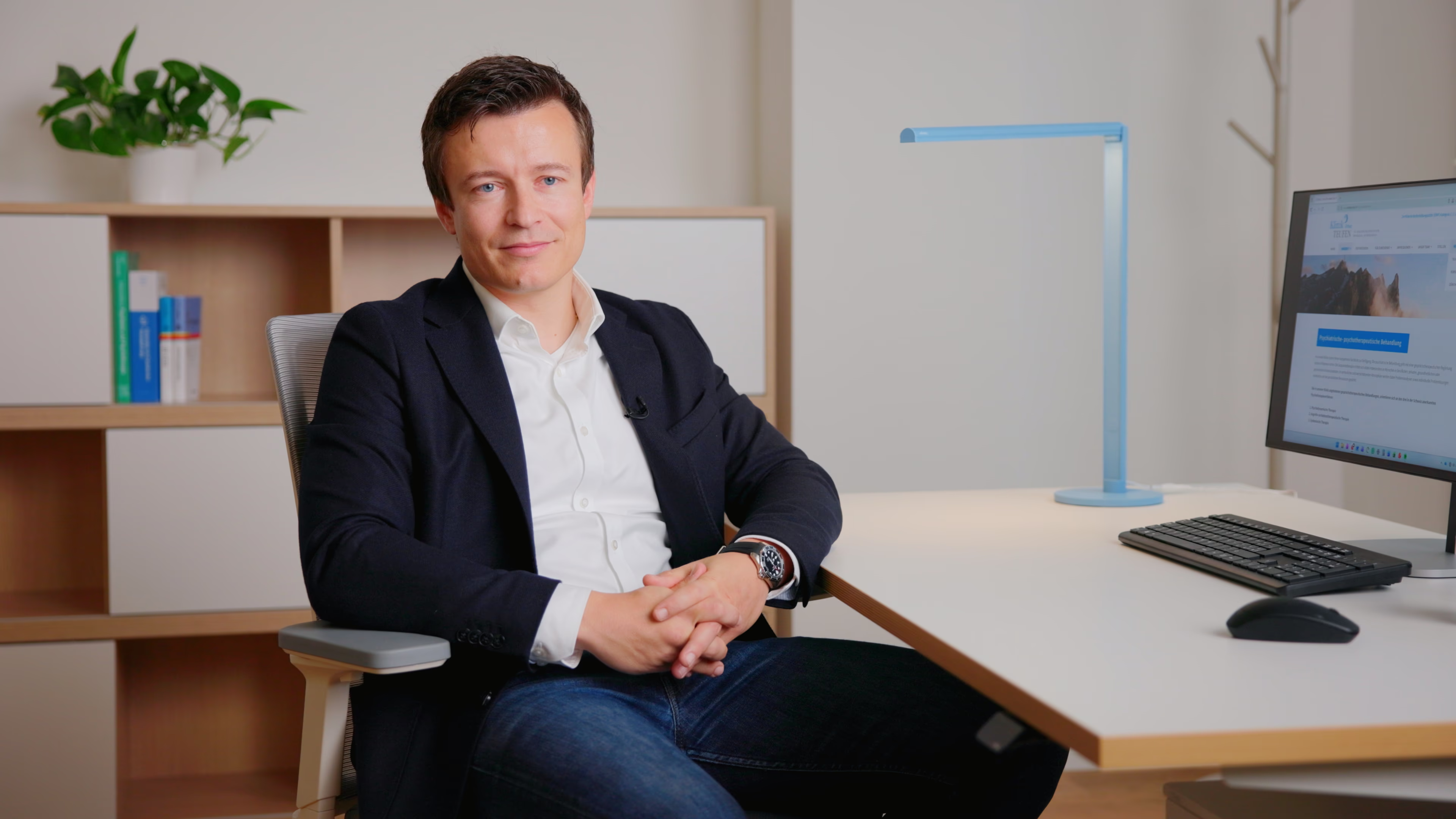
- The Teufen Clinic, an inpatient centre for mental health, where the customer is a nurse.
The method was an interview without a script. What the customers say belongs to them, and the edit keeps the moment where someone hesitates and then finds the sentence, the one no voice actor can replicate.
ofinto runs the videos on a dedicated page and in a social media campaign. Since the launch, ofinto reports more leads. The full account is in the ofinto case study.
Which customer should you ask?
Ask the customer who can point to a result, not the one who likes you most. Satisfaction alone is not a qualification. The customers who persuade share a profile.
- They communicate well out loud, in a conversation.
- They can point to a tangible result, a number or a problem that is now gone.
- They carry recognition in your target industry, so a prospect places the company before the person starts speaking.
One trait outranks the list. A happy but visibly nervous customer on camera lands worse than a slightly critical one who comes across as confident, because the viewer forgives a mild reservation faster than a stiff smile.
How do you get a customer to say yes?
A customer says yes to a testimonial video when the ask is small and the risk is zero. Most customers hesitate over time and camera nerves, not over the endorsement itself. What they have not done before is sit under a light and say it to a lens.
A testimonial interview takes 20 to 30 minutes, prepared in advance so nobody is hunting for a thought on camera. The customer sees the edited cut before it goes anywhere. The only version of them that exists in public is one they approved.
Ask early, while the result is fresh and the person who lived through it is still in the role. A year later you are often filming their successor.
What happens before the shoot?
Before a testimonial shoot, the key points and the phrasing get worked out with the customer in a pre-conversation. The best testimonial videos sound spontaneous and rarely are. That preparation is what separates a stumbling statement from a persuasive one without making it sound rehearsed.
The customer knows which topics are coming and does not memorise answers. Knowing the topic takes the fear out of the room. A memorised answer puts a stranger in the chair.
Which interview questions get a concrete answer?
The interview questions that get a concrete answer ask about a change rather than a feeling. "How was working together?" produces a compliment, and "What concretely changed since you started working with us?" produces a fact. Specific questions produce specific, credible answers.
- "What concretely changed since you started working with us?" This is where the result comes from, the number or the problem that is now gone.
- "What would you have wanted to know before deciding?" This surfaces the doubt a prospect is holding right now, answered by someone who held it and bought anyway.
- "What would you have gotten wrong if you hadn't known better?" The follow-up that surfaces the most honest material, because it treats the customer as an expert.
What happens on the shoot day?
For a testimonial video, a small crew comes to wherever the customer works, sets up fast and stays out of the way. The interview is a conversation with direction. Someone sits across from the customer and asks the questions, and the customer talks to that person, never to the lens.
For ofinto the shoot days were an airport, a school and a clinic, three locations in three days. What the customer has to give is the conversation. The rest of the footage is their workplace and them in it, shot so the testimonial video does not become an event on their calendar.
What do you get back from one shoot?
The main testimonial video runs 60 to 90 seconds, with longer raw cuts kept for specific sales situations. The main clip is the version most people will ever see. The raw cuts are for the moment a prospect raises the one objection your customer happened to answer at length.
One shoot produces a set of videos.
- The main clip, 60 to 90 seconds, for the website and the sales deck.
- Raw cuts, longer versions kept for specific objections.
- Short versions for social media, cut from the same footage.
- Subtitles, for the part of your audience that watches without sound.
- Stills, taken while the lights are up.
The corporate video process runs two to six weeks from first conversation to delivery. Blank Media has made corporate video for BCG, IBM, KPMG, ZHAW, Bestsmile and Sika. What that covers is on the corporate video production page.
Where should a testimonial video be used?
A testimonial video does its work on the website at the decision point, in the sales presentation for a hesitant prospect, and in the feed, where it reads like a recommendation rather than an advertisement.
Least effective is the testimonial video shown in isolation, with no context for why that customer was chosen to speak. Name the company, name the role, and say in one line what they bought and why it mattered, or the viewer's first question stays unanswered.
How does a sales team match testimonials to objections?
A sales team matches testimonials to objections by knowing, before the objection is raised, which testimonial answers it. A sales team with that map responds more precisely than one with a generic reference list. A testimonial video about fast implementation goes to the time-pressured prospect, and one about cost savings goes to the price-sensitive one.
The map is worth building once you have more than two or three testimonials to work with. Several perspectives from different industries or use cases cover more objections than one strong testimonial, however strong. The table below is a starting map, built from the questions above.
If you are working out whether a testimonial video would help your sales team, tell us who your best customer is and what changed for them. That is usually enough for a first conversation.
Frequently asked questions
What is a testimonial video?
A testimonial video is a short film in which a customer describes, in their own words and on camera, what changed for them after working with a company. In B2B the customer is a named person at a named organisation, and the change is something a colleague could check.
How long should a B2B testimonial video be?
60 to 90 seconds for the main clip, often supplemented by longer raw cuts for specific sales situations. Shorter loses substance, longer loses attention.
How much time does a customer need to give for a testimonial video?
A prepared conversation of 20 to 30 minutes, with the topics agreed in advance so nobody is searching for a thought on camera. The filming of their workplace fits around their working day.
What makes a testimonial video feel staged?
General statements with no concrete result, visibly memorised lines, or a speaker with no real relationship to the product. Audiences spot staged situations quickly. The fix is usually a more specific question.
Does the customer approve the testimonial video before it is published?
Yes, the customer sees the edited cut before it is published anywhere. That assurance is usually what turns a hesitant customer into a willing one.