Video Production Cost in Switzerland: What to Budget for a Corporate Video
Quick Navigation

"Roughly what does this cost?" comes up in almost every first conversation we have. Video production cost in Switzerland has a straight answer: a shoot day with editing starts at CHF 2,500, and most corporate videos land between CHF 3,000 for a simple internal interview and CHF 80,000 or more for a multilingual campaign. Where you land depends on how many days a crew spends on set and how much work happens after they leave.
The price ranges on this page are Blank Media's own, in Swiss francs, from its studio in Zurich. Blank Media has produced corporate video for BCG, IBM, KPMG, Sika, ZHAW and Bestsmile, and the numbers come from that work rather than from a survey of somebody else's market.
How much does a corporate video cost in Switzerland?
Video production cost for a corporate film in Switzerland sits between CHF 3,000 and CHF 80,000 or more, depending on scope. The total cost lands in one of three tiers, which cover almost all the corporate and marketing videos we make; the table gives the typical costs for each.
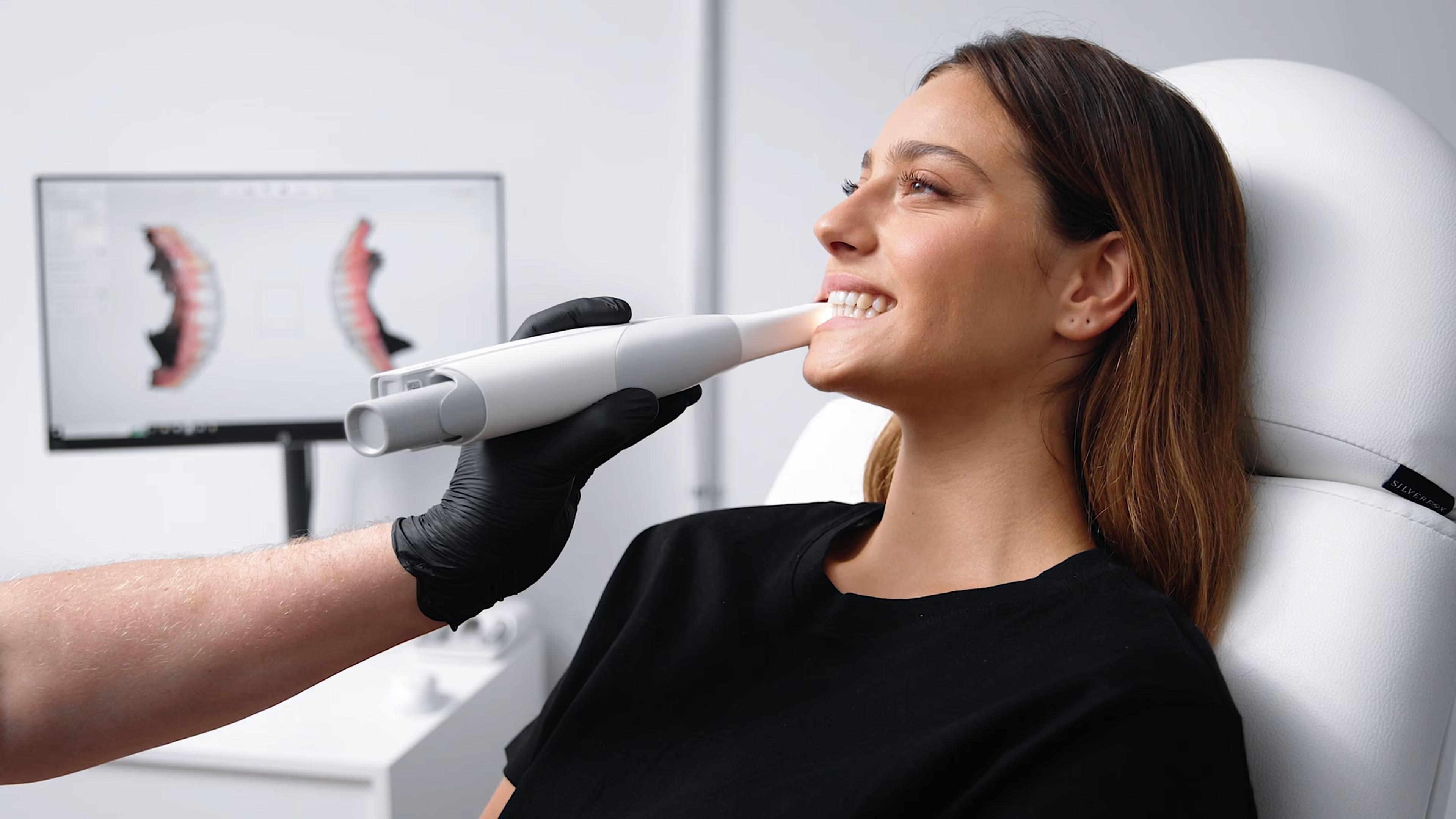
The jump between tiers is measured in days and people. Blank Media shot a three-language patient-journey production for Bestsmile at two locations, with a cast and crew of more than ten, in three production days; that shape, several days and a large crew, is what the top tier buys. Animated video is a different production again, with its own cost structure, and sits outside what this page covers.
What drives video production cost?
Costs for corporate videos and marketing videos vary significantly based on several factors, and the question usually arrives as "what does high quality video production cost", "how much is professional video production" or "what should high quality video content cost". Four things drive video production cost: what the film is for, how many shoot days it takes, how large the crew is, and how much post-production it needs. They are listed here in the order the money gets spent.
Purpose sets the crew, the shoot days and the post effort
An internal statement, an explainer video, a brand film, an event film, a commercial and training or educational videos carry completely different cost structures, even though each of them is technically "a video". An internal communications film shown to ten people has different requirements than one running on the homepage, and the same is true of a film meant to increase brand awareness on LinkedIn and one built for audience engagement at a town hall. The purpose decides crew size, shoot length and post-production effort before anyone picks up a camera.
Decide who will watch it and where before you ask for a number; a good video is built for one audience and one channel. That decision is what a quote is priced from, and it is the one decision only you can make.
The shoot day is the unit a quote is built on
Video production pricing at Blank Media works by the day. A day of shooting with editing starts at CHF 2,500, and the overall cost above that is days multiplied by crew, plus the post-production the format needs.
Each extra day adds crew, equipment and time on location, and each extra element in the edit adds post. A shoot at multiple locations adds travel and location costs on top.
Two shoots with the same finished length can differ by a factor of ten in video production cost because one took an afternoon with one camera operator and the other took a week with a production team. The day count is the first number to ask for on any quote.
Crew size follows the ambition of the result
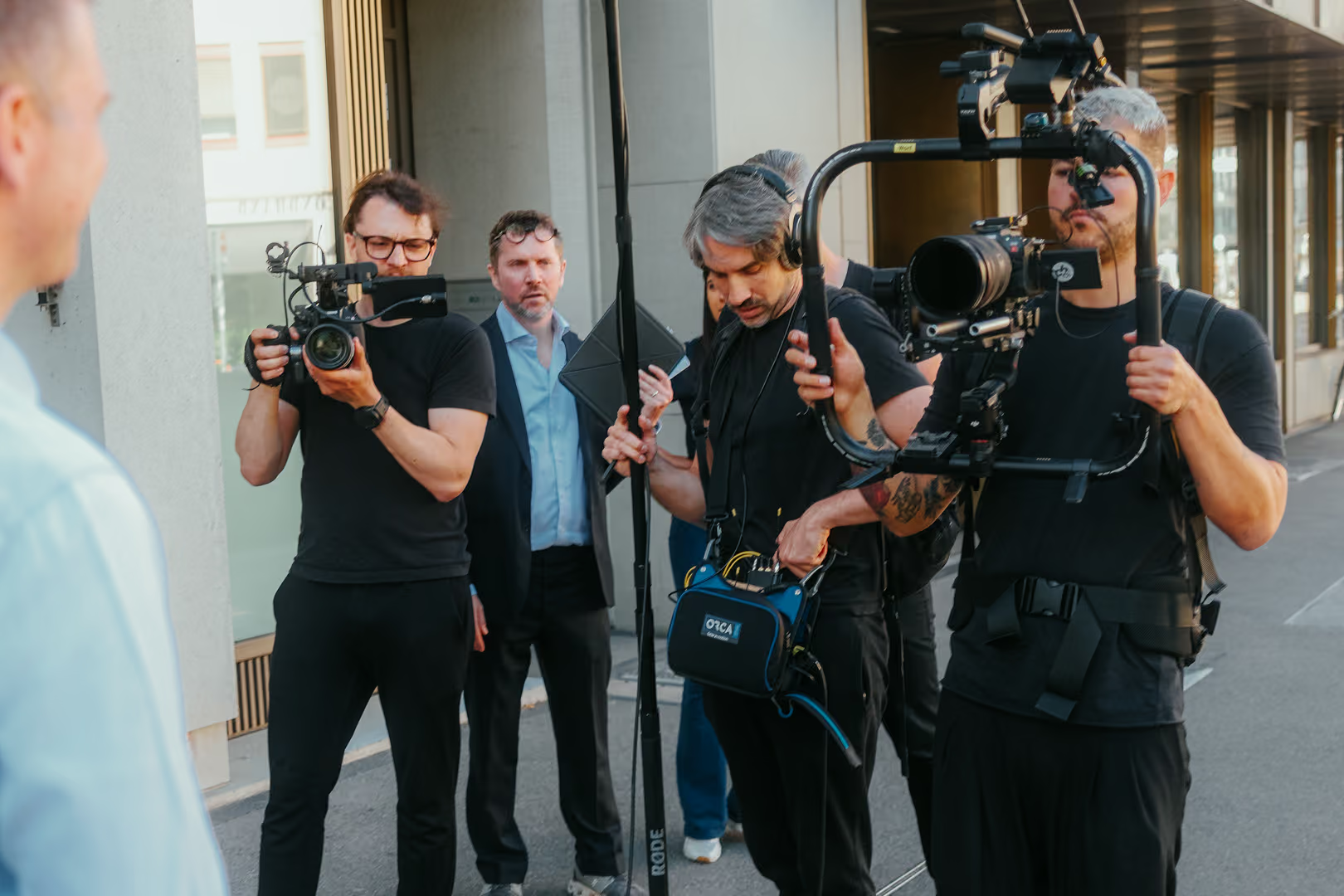
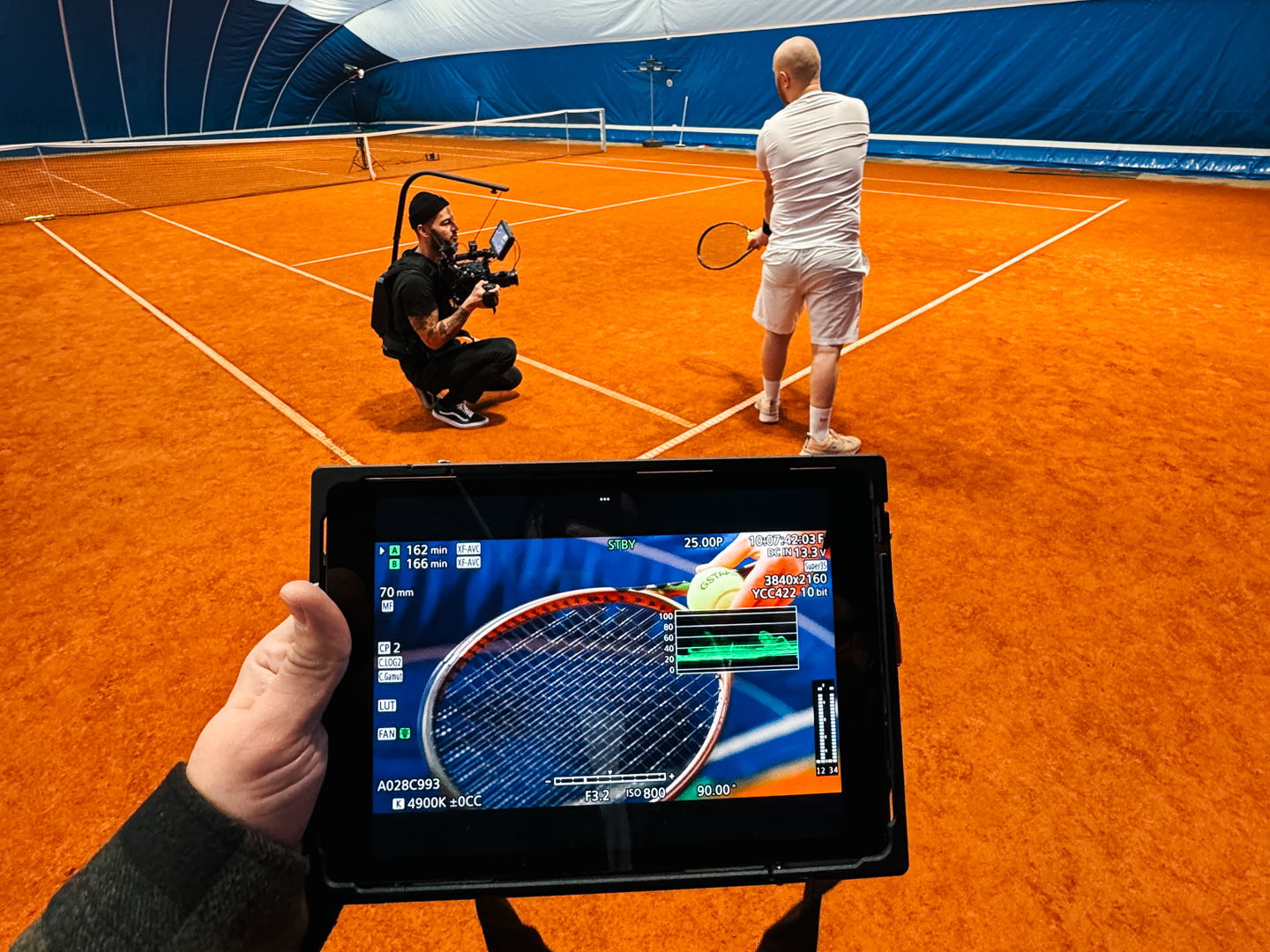
A one-person crew with a single camera costs differently from a multi-person team running several camera positions with lighting and sound equipment, and the technical expertise in that second setup is a large part of what a day rate buys. Crew size should follow the ambition of the result rather than the budget available.
An undersized crew for an ambitious project usually leads to compromises that become visible later, in the edit, where there is no second take. A missing second camera or a rushed sound setup cannot be added in post, and production quality is decided by what was captured on the day.
Post-production is the phase nobody sees on shoot day
Three phases stack: the pre-production phase covers concept development, script and planning; production is the shoot itself; post-production is everything after. Post-production often takes more effort than the shoot itself, and clients underestimate it specifically because it is invisible on shoot day.
What happens after the shoot fills a longer list than most first budgets expect:
- Picture: video editing, colour grading, graphics and animation.
- Sound: sound design, music composition, mixing, voice-over.
- Delivery: subtitles, final mastering, and export formats for every channel the final video will run on.
You review the cut, and we adjust until the final edit is the one you watch and know is right. Approval happens on the edited cut, never on raw footage.
Which costs are missing from a first budget?
Music, language versions, revision rounds, travel, on-camera talent and VAT are the six costs most often missing from a first video budget. None of them is expensive on its own; each of them turns up later as unexpected costs nobody planned for.
- Language versions. Subtitles for viewers who watch on mute, dubbing for viewers who speak another language. Each version is time consuming in post and adds its own post-production costs.
- Revision rounds beyond the number agreed in the quote. Every round is edit time and extra rounds increase costs, so ask how many rounds the quote includes.
- Travel outside Zurich. The studio shoots across Switzerland and abroad; travel costs appear on the quote whenever the video shoot is not local.
- On-camera talent. Presenters, actors and voice-over are cast and recorded by the studio; ask for them as their own line on the quote.
- Music. A composed score costs money and so does music licensing for a library track; ask which one the quote assumes.
- VAT. The Swiss standard rate is 8.1%. Check whether a figure is quoted with or without it before you compare two offers.
How much should a 3-minute corporate video cost?
Video length is a weak predictor of video production cost, and longer videos cost more only when they need more days on set or more work in the edit. A three-minute interview film shot in one day sits in the CHF 3,000 to 8,000 tier. A sixty-second spot with a script, casting and several shoot days costs more, because the cost of video production is built from days on set and effort in post, and neither scales with runtime.
Many English-language video production pricing guides and production companies quote a rate per finished minute, an hourly rate, or a video production pricing sheet by supplier type. Those are US video production rates in dollars, and neither unit tells you how many days your film needs; most video content built for web and social runs under two minutes in any case. Ask for the shoot days and the post scope behind a Swiss quote instead, because an hourly rate only becomes a price once you know the days.
Where can you save on a video production?
Two moves save costs on corporate videos: getting more out of each shoot day, and locking the decisions before the crew arrives. Both happen before the crew is booked.
- Take more from the same day. Weeks of short video content for LinkedIn, subtitles, stills and extra b-roll for later projects can all come off a shoot day already booked; creating content from footage you already shot comes at a lower cost than booking another day.
- Batch the interviews. Three executives on one date is one shoot day. Three dates is three.
- Decide who signs off before the shoot. Nothing films until the script and plan are signed off, so name the approver in pre-production; that is where revision rounds that exist to make everyone feel involved get cut.
What do you need to send for a first estimate?
A first estimate of the cost of video production for a corporate film needs five things: goal, audience, format, rough scope and the date, which sets the project length. With those five points, a first price range comes back without you working out every detail in advance, and the more precise they are, the more accurate that first number will be and the easier it is to place in your video marketing budget.
Come with a finished concept, or with nothing more than "we need a video"; both work. Tell us what you are making, who has to watch it and where it sits in your content strategy if it has one, because the audience sets the size of the production, and the detail gets worked out together once the range is agreed.
For frequently requested formats, employer-branding videos, corporate films and event clips, standardised packages exist. For everything else you receive a detailed quote before we begin, with no hidden costs, and the video production process runs two to six weeks from start to delivery; what our corporate video production covers, from explainer videos to executive statements, is on the service page. Send the five points to hello@blankmedia.ch and you get a range you can plan with.
Frequently asked questions
What is the cheapest type of corporate video in Switzerland?
A simple, internally used format with a small crew and light post-production: an interview or a short statement, usually between CHF 3,000 and CHF 8,000, with a single shoot day including editing starting at CHF 2,500. A basic video for internal use stays in this tier; anything that will be seen publicly should budget for the next tier up.
Why do two quotes for the same video differ so much?
Usually because of different assumptions about crew size, shoot days and the number of revision rounds. A quote that lists all three can be compared line by line; one that gives a single figure makes the difference hard to spot. Ask each video production company for the three numbers before you compare the totals.
Are pre- and post-production included in the quote?
In a complete quote, yes: pre-production activities, meaning concept, script and planning before the shoot, and editing, colour, sound and subtitles after it. Some cheaper quotes cut exactly these phases, and the cut shows up later in production quality or as extra costs. Blank Media quotes in detail before the project starts, with no hidden costs.
How do I estimate a video production budget before asking for a quote?
Clarify the goal, the audience and the format internally first, then place the project in one of the three video production cost tiers. Simple internal formats sit at CHF 3,000 to 8,000, a full production at CHF 10,000 to 25,000, and multilingual or international work at CHF 30,000 and up. With those three points settled, a video production company can give a solid first range without you working out every detail.
How many shoot days does a corporate video need?
One shoot day with editing is where Blank Media's pricing starts, and one day covers simple projects: an interview, a statement or a short social clip. Complex projects with several languages or locations run to several days; Blank Media's three-language production for Bestsmile was shot at two locations in three production days. Brand films and recruiting videos sit between the two, and the day count is the first thing a quote should state.